Curly hair gets treated like a problem in too many shops — rushed, dried out, cut like it's straight. It's not a problem. It's an advantage. Curl has volume, shape, and personality that straight hair spends real effort trying to fake. Put the right fade underneath it and the contrast does all the talking: tight, clean sides that make the texture on top the whole show.
The trick is matching the fade to your curl pattern and your patience. Here's what actually works.
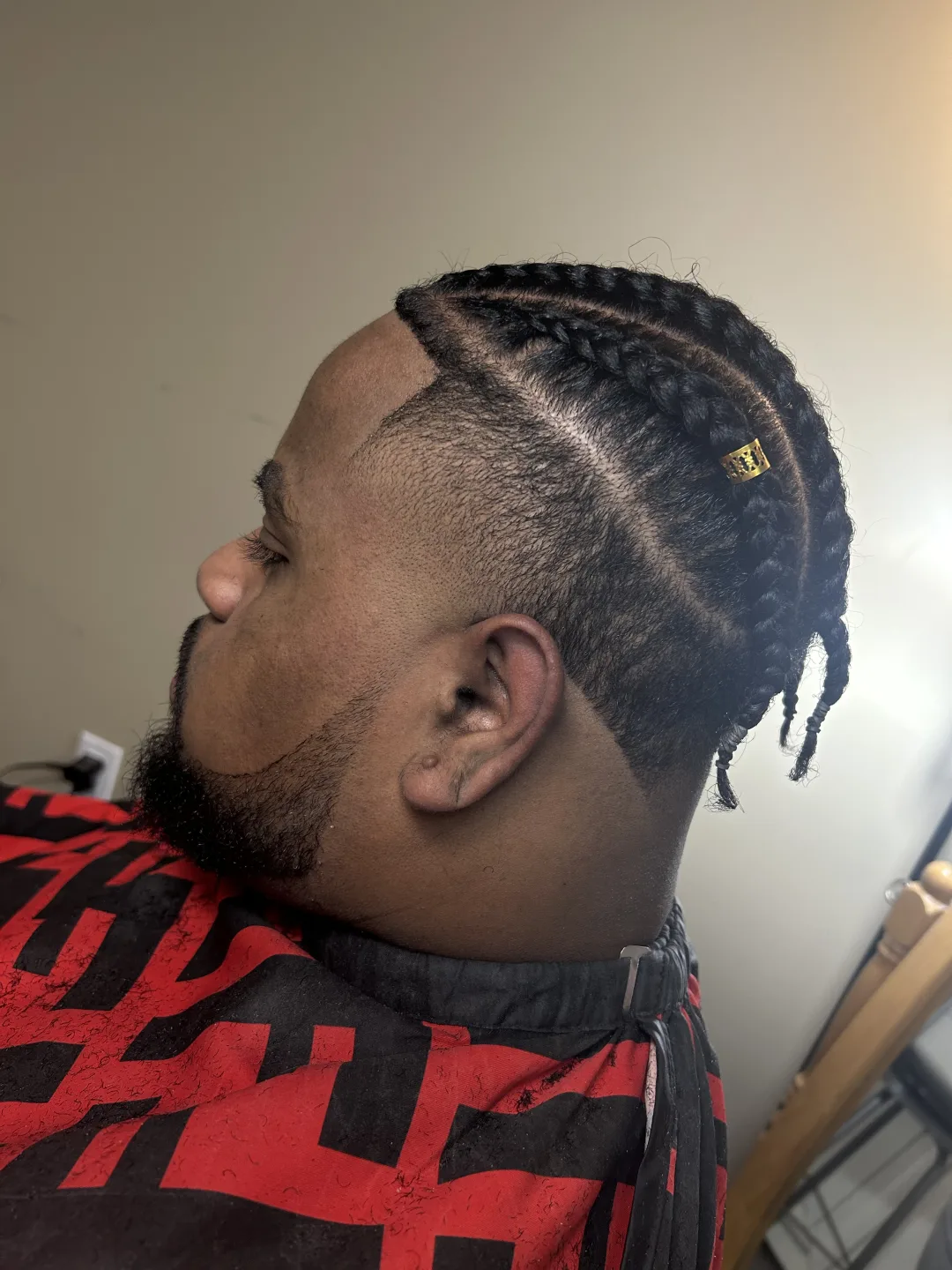
Why do fades and curls work so well together?
Left to grow evenly, curly hair expands outward as much as downward — that's how you end up with the dreaded triangle: flat on top, wide at the sides. A fade deletes the sides from the equation. All the width disappears, all the volume moves up top, and suddenly the silhouette is sharp instead of round.
The contrast also frames the texture. Curls sitting against bare or near-bare skin look intentional, sculpted, styled — even on mornings when you've done nothing. And practically speaking, faded sides mean less bulk, less heat, and less hair to manage. The curls get all your attention, and they deserve it.
Which fade height is best for curly hair?
All of them can work — the height just changes the story:
- Low taper. Keeps the most curl. The sides shorten gently at the edges while the curls stay full. Ideal for medium and longer curly styles that need a clean frame, not a hard stop.
- Mid skin fade. The sweet spot for most curly heads. Real contrast, real cleanliness, and still enough hair left to keep the shape balanced.
- High fade. Maximum drama. Best under a tight, dense curly crop where the top is short and defined.
- Burst fade. The pick if you're wearing a curly mohawk, a fringe-forward style, or keeping length at the back.
If you're still deciding how much length to carry overall, start with our curly hair cuts guide and work backwards from the style you want to live in.
Should curly hair go taper or full skin fade?
It comes down to two things: density and maintenance.
Dense, tightly coiled hair loves a skin finish — the clean break between bare skin and coil is striking, and it strips out serious bulk. Looser, finer curls often look better with a taper or a fade that stops at a low guard, so the sides don't read too thin against a softer top.
Then there's upkeep. A skin fade under a curly top needs refreshing every two to three weeks, because curl regrowth blurs the blend fast. A taper forgives for twice as long. Be honest about how often you'll actually sit in the chair, and pick the finish that matches your life — not just the photo you saved.
Already sold? Skip ahead and book the chair →
What should you wear on top?
This is where curly hair flexes:
- Curly crop. Short, sponge-friendly, defined. Low effort, high impact — and the upkeep overlaps heavily with maintaining a textured crop.
- Defined curls with a cream. Medium length, curls encouraged rather than fought. A curl cream and a shake, done.
- Sponge twists. Tight coils twisted into texture — pairs beautifully with a mid or high fade.
- Braids or cornrows. Protective, sharp, and striking over faded sides. If that's the direction, read up on getting braids with a skin fade first.
Whatever the top, ask for it to be shaped curl by curl where it matters. Curly hair cut wet and pulled straight lies about its length every single time.
How do you keep a curly fade looking good?
Moisture first, always. Curly hair runs dry, so condition more often than you shampoo, bring in a leave-in when the Guelph winter starts pulling moisture out of everything, and let curls air-dry or diffuse instead of rough-towelling them into frizz.
Sleep on silk or wear a bonnet or durag if you're protecting definition. In the morning, refresh with water and a little product rather than restyling from zero. And keep the schedule honest: the fade needs the chair every two to three weeks, even when the curls up top still look great.
That's the whole formula — hydration at home, precision in the chair. Book the chair and keep the rotation tight.
What do you say in the chair?
Keep the order simple: name the fade, the finish, and what the curls are doing. “Mid skin fade, keep the curls on top, natural front.” “Low taper, shape the curls but keep my length.” “Burst fade, leave the back, tighten the sides.” That's all it takes to get on the same page.
Then add the context that actually matters: how you style it in the morning, how often you'll realistically come back, how much your hair shrinks as it dries. Curly hair carries more variables than straight hair, which is exactly why it rewards a barber who takes the time — and in a private, one-chair studio in Guelph, time is the one thing your appointment is guaranteed.