Curly hair isn't difficult. It's just been cut badly — by barbers who treat it like straight hair that misbehaves. Cut curls the same way you'd cut straight strands and you get triangle head, surprise shrinkage, and a shape that only exists for the first hour after the shower.
Cut them with intent and curly hair becomes the cheat code: natural volume, built-in texture, movement that straight-haired guys pay for in product. This is the playbook — what to ask for, which cuts hold up, and how to keep it all working between visits.
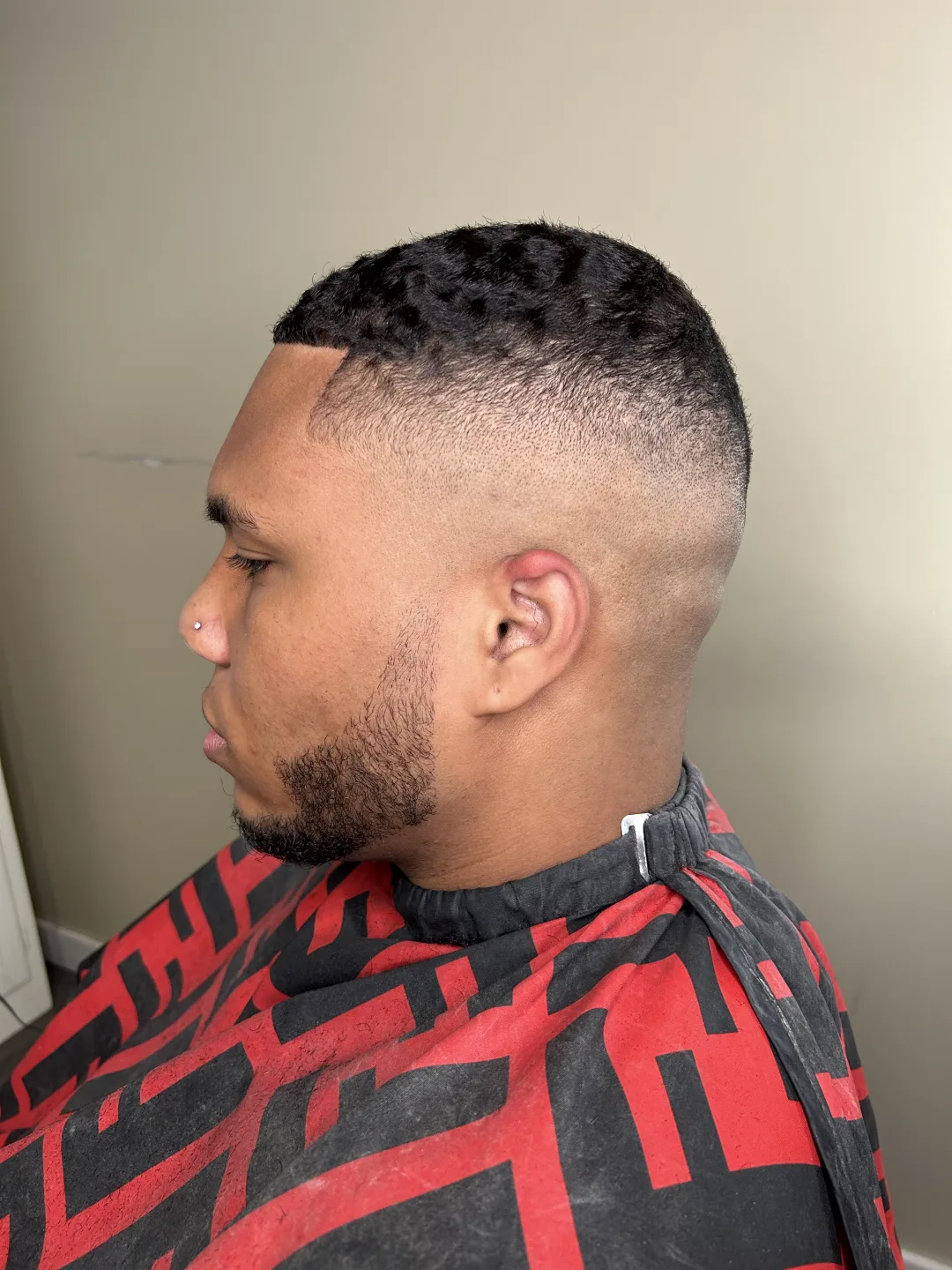
Why do most haircuts fight curly hair?
Three reasons. First, shrinkage: curly hair sits dramatically shorter dry than it looks wet, so a cut measured wet lands shorter than anyone planned. Second, weight: curls stack on each other, and removing weight in the wrong spot turns clean volume into shapeless puff. Third, uniformity: cutting every section to the same length ignores the fact that different curls on the same head coil at different rates.
None of that is a hair problem. It's a technique problem. A barber who works with texture cuts curl by curl where it matters, checks the shape as it dries, and builds the silhouette around how your hair actually behaves — not how it hangs when it's soaked flat.
What's your curl type?
You don't need a chart taped to your mirror, but knowing your pattern helps you ask for the right cut.
Waves
Loose S-shaped movement, minimal shrinkage. Almost every cut works — the game is enhancing the wave instead of flattening it.
Curls
Defined springs and loops with moderate shrinkage. Shape and weight placement start to matter a lot here; this is where crop-and-fade combinations shine hardest.
Coils
Tight, dense texture with serious shrinkage. Structure is everything — compact shapes, tapers, and precise lineups do the heavy lifting.
Most heads carry more than one pattern — the crown often coils tighter than the front. A good cut accounts for the mix instead of pretending it isn't there.
Which cuts actually work with curls?
The winning formula keeps personality on top and discipline on the sides:
- The curly crop. Curls cropped into a compact shape over a fade — texture on full display, near-zero styling debt. Our guide to maintaining a textured crop applies double if yours is curly.
- Skin fade with curls on top. Maximum contrast. The tighter the fade, the louder the curls read. We break down which heights suit which patterns in best fades for curly hair.
- The taper. Keeps the most length while still framing the edges — the move when you're growing your curls out but refuse to look unfinished doing it.
- The curly fringe. Length pushed forward over the forehead. Softens strong features and puts the pattern front and centre.
The common thread: every one of these controls the perimeter and lets the texture do the talking up top.
Already sold? Skip ahead and book the chair →
Should curly hair be cut wet or dry?
Ask for the shape to be finished dry. Wet cutting has its place for setting the foundation, but curls only tell the truth once they've dried and shrunk into position. A cut that ends the moment the water leaves is a cut that gambles on where your curls will land — and curls don't gamble kindly.
This is exactly the kind of thing to raise in the consult at the start of the appointment. Say how you actually wear it day to day — air-dried or diffused, product or no product — so the shape gets checked against reality instead of against the spray bottle. A signature cut builds in that consultation time for precisely this reason.
How do you style curls between cuts?
Moisture first, always. Dry curls frizz; hydrated curls clump and spring.
- Start in the shower with conditioner. Curly hair almost always wants more conditioning than shampooing.
- Apply a curl cream or lightweight leave-in to soaking-wet hair. Scrunch upward — don't rake it through.
- Air dry, or diffuse on low. Don't touch it while it dries; hands are where frizz comes from.
- At night, sleep on satin or wrap up so the pattern doesn't get crushed against cotton.
Skip heavy waxes and shiny pomades — they weigh curls down and glue the clumps together. If you want more definition or hold, layer a light gel over the cream and scrunch the crunch out once it's fully dry.
How often should curly hair get cut?
Every four to six weeks for most curly cuts. Curls are forgiving in the grow-out — extra length blends into the texture instead of hanging limp — but the shape still drifts, and faded sides drift fastest. If you're running a skin fade under your curls, plan a cleanup every two to three weeks between full cuts.
Growing it out? Don't disappear for six months. A trim every couple of months keeps the ends healthy and the silhouette intentional while the length comes in. Whenever you're ready, book the chair — texture gets treated properly at this end of Guelph.