A clean fade and a good beard can still add up to a mediocre look — if they never talk to each other. The giveaway is the sideburn: a hard stop where the haircut ends and the beard starts, like two separate projects sharing one head.
The blend is what fixes it. When the fade steps down through the sideburn and rises back into the beard as one continuous gradient, the whole thing reads as designed instead of assembled. Here's how the blend actually works, which fades carry a beard best, what to ask for, and how to keep it sharp between visits.
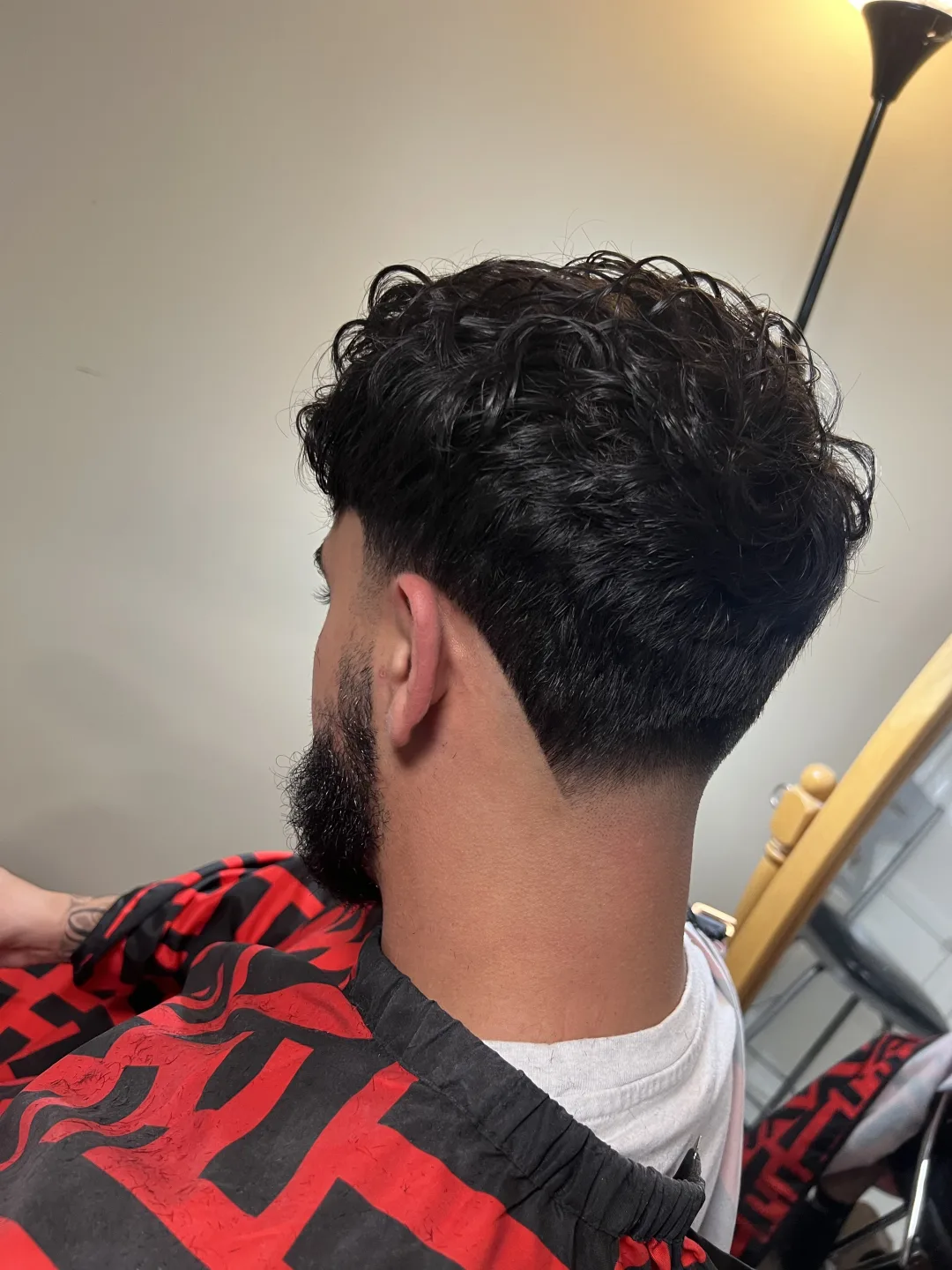
Why Does the Blend Matter So Much?
Because the sideburn is where everyone's eyes land. It sits right at the edge of your face, in every profile view, every photo, every conversation. When there's an abrupt jump — short faded hair straight into dense beard — it breaks the line of the whole look. The cut looks fine. The beard looks fine. Together, they look unfinished.
A proper blend does the opposite. It carries the fade's logic down into the beard, so the eye travels from skin at the temple to full density at the jaw without ever catching on a seam. That continuity is what makes people say a look is clean without being able to explain why.
It's also the detail that separates a barber who cuts hair from one who designs the whole head. The top, the fade, and the beard are one composition. Treat any piece separately and the composition falls apart.
How Does a Barber Blend a Beard Into a Fade?
The short answer: the sideburn stops being a boundary and becomes a gradient. Here's what that looks like in practice.
- The fade sets the starting point. Wherever the fade lands at its lowest edge — skin, or a tight guard — that length carries into the top of the sideburn instead of stopping at it.
- Guards step up on the way down. Moving down through the sideburn toward the jaw, the length increases in small, even steps. No jumps, no walls.
- Beard density gets managed. If the beard is heavy, the upper portion gets thinned slightly so the transition doesn't slam from short hair into a hedge.
- The edges tie it together. The lineup at the temple flows into the cheek line, so the front profile is one continuous edge.
This is precision work with almost no margin for error, which is why it's built into the cut and beard as a single, unified service rather than two jobs stapled together.
Already sold? Skip ahead and book the chair →
Which Fades Pair Best With a Beard?
Almost any fade can blend into a beard, but they carry it differently:
- Low taper. The most seamless option. The hair stays longer lower down, so the step into beard density is short and subtle. If you want the beard to feel continuous with the hair, start here.
- Burst fade. Curves around the ear and leaves the back fuller, which keeps a natural runway into the beard at the sideburn. Great with fuller beards.
- Skin fade. The boldest version — skin at the shortest point rising into a full beard is a high-contrast, high-impact look. It demands a crisp blend and more frequent upkeep, but a proper skin fade with a well-carried beard is hard to beat.
- Drop fade. Falls behind the ear, which pairs the fade's curve with the jawline nicely on rounder faces.
None of these is the wrong answer. The right one depends on your beard's density, your face shape, and how often you want to sit in the chair.
What Should You Ask For in the Chair?
You don't need barber vocabulary — you need three decisions. First: the fade. Low, mid, or high, and whether it goes to skin. Second: the beard length you're keeping. Third: the magic sentence — “blend the beard into the fade.” That one line tells your barber the sideburn is a transition, not a boundary, and the rest is craft.
If you're not sure about the details, say that too. Describing what you want in plain words beats guessing at terminology every time — we wrote a whole piece on what to tell your barber for exactly this reason. Photos help. So does honesty about how much maintenance you'll actually do. A blend designed around your real habits will always outlast one designed for someone else's.
How Do You Keep the Blend Sharp Between Cuts?
The transition zone is the fastest part of the look to grow out — it's short hair by design, so a week of growth shows there first. Between appointments, the rule is simple: maintain around the blend, never inside it.
- Leave the sideburn gradient alone. One home-trimmer pass through the transition and the gradient becomes a step. It will not blend back on its own.
- Keep the neckline clean. Below the jaw is safe territory — clearing neck growth keeps the whole look fresher, longer.
- Brush and balm the beard. A beard that lies in one direction keeps the blend readable even as it grows.
Then get back in the chair before the gradient disappears entirely — every two to three weeks for most guys, faster for skin fades. Studio K runs one chair, by appointment, here in Guelph, so book the chair before the seam shows up in your photos.