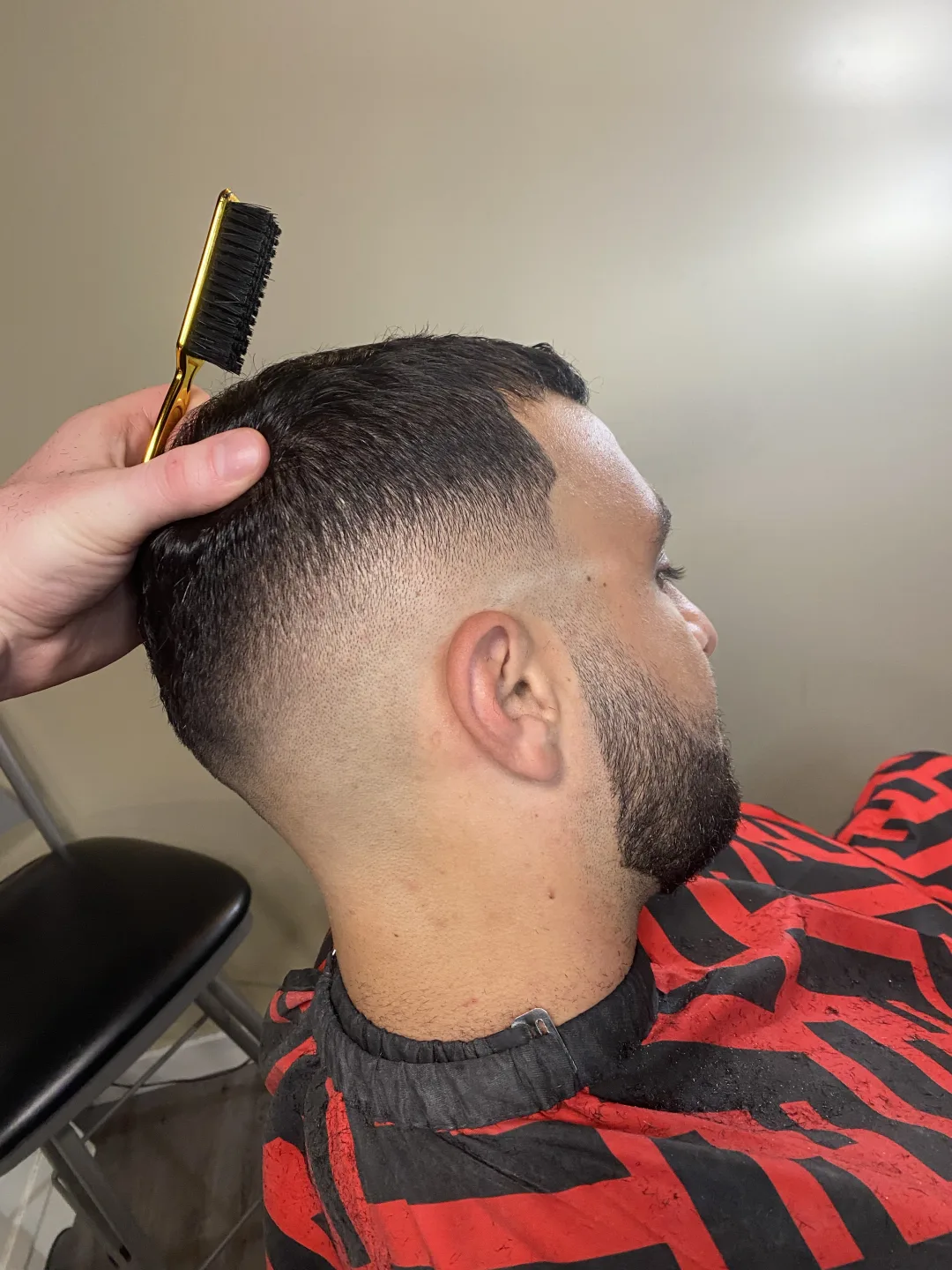
A skin fade shows everything. Every step, every shadow, every rushed blend — it's all right there under the light. That's why this one earns its own line on the menu. At Studio K it's clipper work, foil and blade, checked and re-checked until the gradient reads clean from any angle.
Low, mid or high, tied into a crop, curls or length on top — the fade adapts to the cut. You leave edged up, styled and ready to walk straight into whatever's next. Book the chair and see what a private studio does differently.
What happens in the chair
Consult on height and shape first — where the fade should sit depends on your head shape and how you wear the top. Then the build: guards stepped down in tight increments, the transition opened up and blended, a foil shaver taking it to skin, blade detailing on the hairline. The edge-up frames the whole thing — temples, corners and neckline finished to suit your growth. You're styled before you're out of the cape.
Low, mid or high?
Height changes the whole attitude. A low fade stays subtle and office-safe. Mid is the all-rounder — clean from every angle without going dramatic. High is the statement, maximum contrast. If you're torn, the mid vs high breakdown is worth two minutes, and the skin fade guide covers exactly what to say in the chair. Or just say "not sure" at the consult — that works too.
Who it's for
Skin fades work across straight, wavy, curly and coiled hair — the blending technique shifts, the result doesn't. It's also one of the smartest moves for thinning sides or a maturing hairline, because taking the sides to skin removes the contrast that makes thinning obvious. Wearing braids or twists up top? Arron fades and lines up around existing braids — the styling stays yours, the perimeter gets sharp.
Keeping it fresh
Straight talk: skin fades are a commitment. The skin-level sections grow in fast, and most guys book every two to three weeks to keep the gradient crisp. Between visits, moisturize the faded area, keep your own clippers away from the blend, and resist "just tidying" the neckline. The fade maintenance guide covers the full routine.